
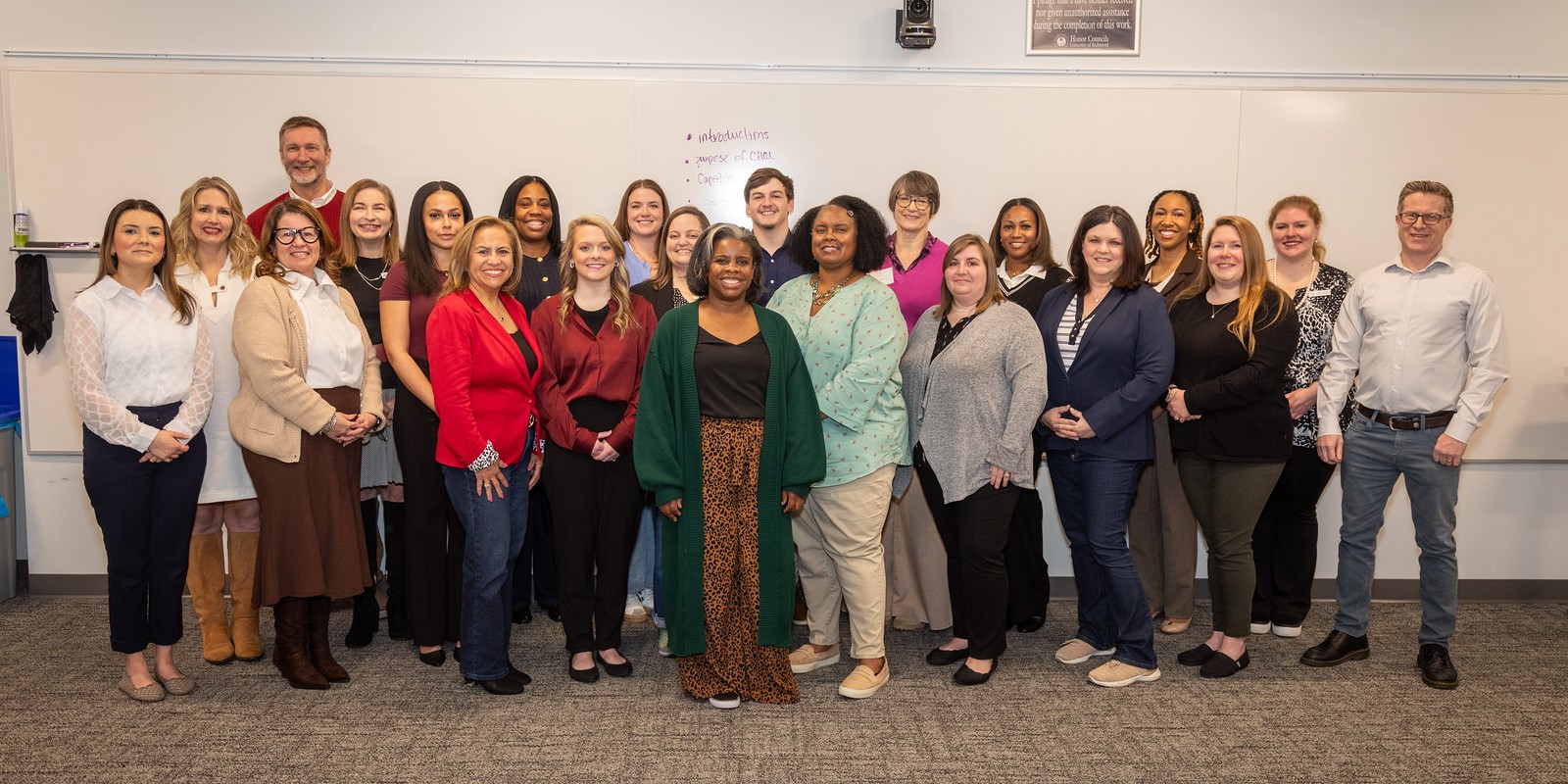
Community Health Center University
Developing the next generation of Virginia's health center leaders
The VCHA Community Health Center University (CHCU) leadership program, hosted in partnership with the University of Richmond and the Virginia Association of Free Clinics, targets emerging leaders from Community Health Centers (CHCs), lookalike centers, and free clinics in the Commonwealth of Virginia.
Throughout the year-long program, participants gain experience through a curriculum of seminars and practical activities tailored to the CHC setting. Every monthly learning session and one-to-one leadership coaching session is developed and delivered by expert coaches from a full range of healthcare administration backgrounds. Admitted as a cohort, participants gain a network of peers and mentors for their time in the program and beyond.
The CHCU program is designed to cultivate a range of leadership skills essential to community health center development, from evaluation and compliance to strategy and growth. CHCU graduates are empowered to bring their skills and leadership back to their CHC to build and strengthen their organization, its mission, and its impact.
Differences in managing vs. leading
Developing an organizational value strategy
Demonstrating the value of Community Health Centers to key stakeholders
Practicing and promoting positive leadership across their organization
Practicing and promoting positive management in their daily work
Program Details
Applications are open to staff of Virginia FQHCs, lookalikes, and free clinics. As CHCU is a program for emerging leaders, applicants should not be long-tenured members of their organization’s C-suite. (C-suite members new to the FQHC or free clinic space may be considered.)
The application period for the 2027 Cohort is open August 14-October 15, 2026.
Each year, 20 individuals are selected to participate in the program. A one-year commitment is required.*
The one-year commitment includes:
- Attendance in 10 one-to-one coaching sessions. **
- Attendance in all in-person learning sessions. ***
- Completion of a Capstone project.
- April check in call with VCHA CHCU Director.
- Video introduction of each participant.
*Emergencies (illness, death, etc.) will be reviewed by the program director and excused when applicable.
**All coaching sessions must be attended. If a need arises to cancel/reschedule, 24-hour notice is required to be provided to your coach, and it will be the participant’s responsibility to reach out and reschedule. Completion of the program is dependent on 10 sessions of one-to-one coaching.
***Learning sessions are mandatory. All participants must attend all sessions. Completion of the program is dependent on attendance.
Program Value
Costs to Participants
The program is valued at $8,300 – and is offered at no cost to you, if accepted.
Additionally, lunch and snacks at learning sessions are provided.
Travel to each monthly in-person learning session and incidentals will need to be covered by your organization. Hotel blocks will be available for each session at a discounted rate.
Orientation, the Capstone presentation, and all monthly learning sessions are delivered in-person on the University of Richmond campus.
Completion of 11 modules, 10 coaching sessions, and a Capstone project earns students a University of Richmond Certificate*, 8.8 CEUs, and a University of Richmond digital badge*.
*Certificate and digital badge are co-branded VCHA and UR.
Orientation and Reception
Thursday, January 21, 2027.
- Introduction to the program
- Expectation-setting for the year
- Social reception and networking
Module 1: Leading Change
Friday, January 22, 2027.
Led by Dr. Jessica Flanigan, Richard L. Morrill Chair in Ethics and Democratic Values, University of Richmond.
- Learn to lead from any position
- Making the transition to leadership
- Learn to communicate effectively in the context of disagreement (conflict)
- Learn to use authority ethically in a way that considers all stakeholders
- Applying leadership principles to relevant case studies
Module 2: Leadership Challenges
Friday, February 26, 2027.
Led by Dr. Angela Taylor, Director of Health Center Control Network – Center for Data, Analytics, and Quality (CDAQ), VCHA.
- Discuss the reality of leading a health center
- Policy issues
- The impact from outside influences that affect health centers
- Navigating the complex challenges faced by health centers
- Financial instability
- Workforce shortages
- Healthcare access barriers
- Integration of health information technology
- Complexity of the policy and regulatory landscape affecting health centers
- Fundraising
- Leadership
Module 3: Strategic Thinking and Planning
Friday, March 19, 2027.
Led by Dr. Carolyn A. (Cindy) Watts, Professor Emerita, Department of Health Administration, Virginia Commonwealth University.
- Understand the strategic thinking perspective and its importance to your organization
- Have a general model for creating a strategic plan
- Have a set of resources to help you with a deeper dive
- Understand considerations to strategic planning – road bumps, detours, and traffic jams
- Understand outside influences
Module 4: Program Evaluation
Friday, April 16, 2027.
Led by Trina Willard, Founder & Principal, Knowledge Advisory Group.
- Understand basic evaluation concepts
- Develop practical evaluation skills
- Use accessible research methods
- Evaluate health center program impact
- Communicate results effectively
- Understand ethical considerations
- Support program improvement
Module 5: Introduction to Health Care Compliance and Legal/Ethical Decision-Making
Friday, May 21, 2027.
Led by Prof. Rachel Suddarth, Professor of Law, Richmond Law.
- Understand the HR and Legal perspectives in FQHC settings
- Discuss ethical issues and work through practice scenarios
- Understand legal compliance
Module 6: Trauma Informed Care and Resilience
Friday, June 25, 2027.
Led by John Richardson-Lauve, Senior Director of Community Outreach and Trauma-Informed Care Specialist, St. Joseph’s Villa.
- Understand Trauma Informed Care (TIC) and why it is important in health care
- Learn how to work within a TIC Framework, in an HC system
- Identify and understand resilience
- Identify and understand the importance of Adverse Childhood Experiences (ACEs) and how they affect individuals, families, health, and food security
- Through personal stories, identify resilience and how it can be applied
Module 7: PT. 1 Financial Modeling for Healthcare and PT. 2 Budgets & Planning
Thursday, July 15 and Friday, July 16, 2027.
Part 1 will be held on Thursday afternoon from 1pm – 5pm; Part 2 will be held on Friday morning from 9am – 1pm.
Led by Dr. Nathan Carroll, Associate Professor of Health Administration, Virginia Commonwealth University and Dr. Saleema Karim, Associate Professor of Health Administration, Virginia Commonwealth University.
- Learn how to plan and budget within a healthcare environment
- How to budget at every level of leadership
- Understand financial models in healthcare
Module 8: From Data to Action: Leveraging Data for Decision Making
Friday, August 20, 2027.
Led by Jim Morrison, Vice President, Data Strategy and Governance, American Nurses Association.
- Learn how to find, retrieve, and apply valid data
- Learn how to use data and metrics to guide decision-making
- Learn how to apply metrics in daily and overall decision making
- Understand when data impacts your system negatively and how to address/manage those situations
- Understand the evolving role of AI and Data
Module 9: Communications
Friday, September 10, 2027.
Led by Sunni Brown, Director of Media & Public Relations, University of Richmond, and Amy Armstrong.
- Learn how to have different types of difficult conversations
- Identify and understand effective advocacy
- Learn how to tailor presentations to differing audiences
- Learn basic guidelines for talking to the press
- Negotiating skills
- Navigating social media
Select participants will participate in on-camera interviews and receive peer and faculty feedback.
Module 10: Dealing with Disruption
Friday, October 8, 2027.
Led by Dr. Mary Lynn Lunn, Adjunct Professor, Robins School of Business, University of Richmond.
- Identify the role of CHC’s – Proximity, voice, education, access, care, channel to specialized care, overflow from other providers (Mental Health, SUDs, post-ED care.)
- Understand how to work with the constant disruption of staffing issues, financial stress, and the ever-changing, diverse needs of differing populations
- Understand a range of disruptions – pandemic, mass casualty events, mental health crisis, etc.
- Understand universal needs
- Create a toolkit/practice model for dealing with disruption, including leadership skills, observational skills, nimbleness, infrastructure, communication, enhanced health care equity, community relationships, financial systems, and payment models
- Understand positive disruption
Module 11: Future of Healthcare
Friday, November 12, 2027.
Led by Dr. Rick Mayes, Professor of Health Studies, University of Richmond.
- Understand issues in health care, including Cost Control, “Big Med” and the consequences of integration, consolidation, and private equity in health centers, as well as ways to lead change with this knowledge
- Collective bargaining and strikes among health center workers
- Discover how health centers creatively engage their frontline clinicians to improve performance, morale, and retention
- The importance of value-based care
Capstone Presentation and Certificate Ceremony
Thursday, December 9 and Friday, December 10, 2027.
A celebratory dinner will be held on Thursday evening (location TBD but near U of R). Presentations and the certificate ceremony will be held on Friday on the University of Richmond campus.
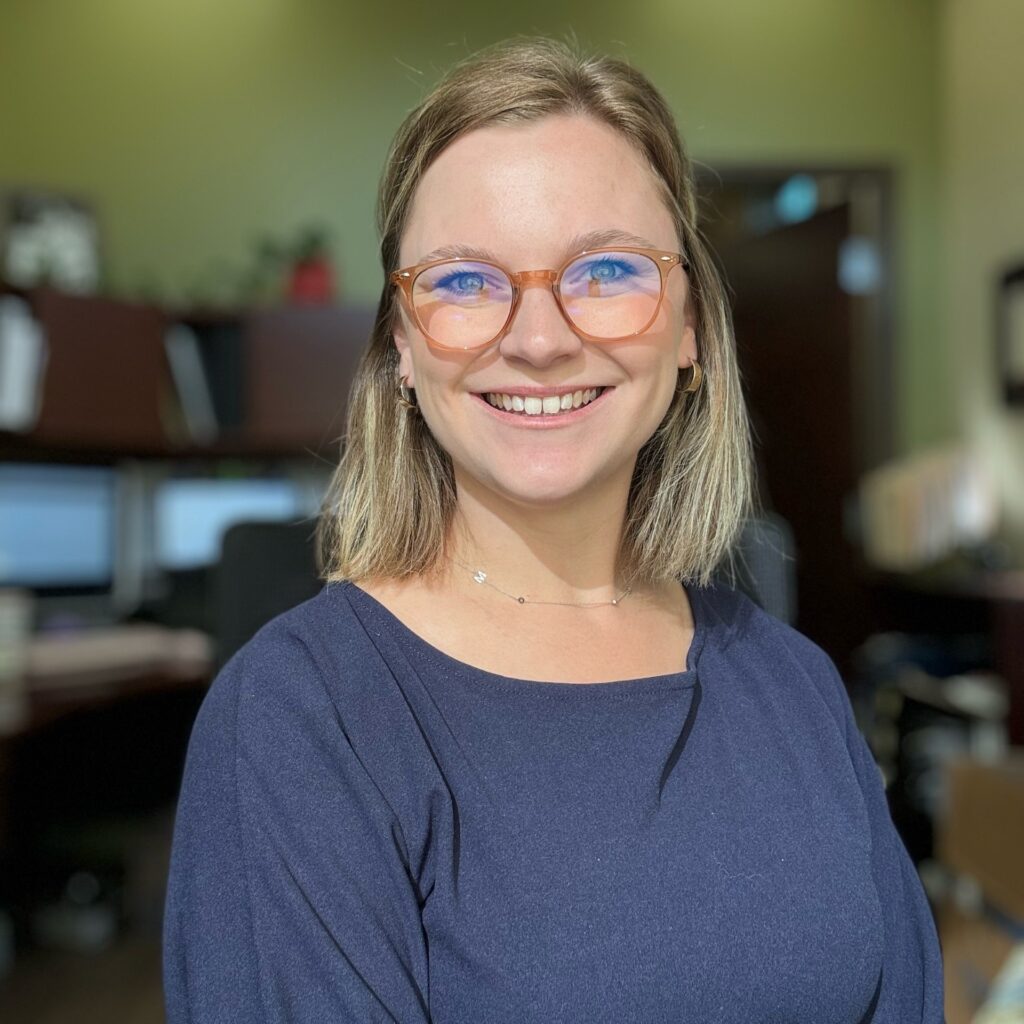
Being selected for the CHCU cohort has been an incredible honor. Initially, I felt intimidated joining a group of highly educated and accomplished professionals, especially as a new HR assistant with no direct leadership experience. However, the program has been transformative. I've gained valuable insights into leadership, discovered more about myself, and built a supportive network. The curriculum—from ACEs and strategic planning to mass media communication and finance—has enriched my preparation for effective leadership. Paula, my coach, has been a fantastic guide, pushing me out of my comfort zone and inspiring new ideas, professionally and personally. Each class and coaching session has offered a profound opportunity for growth. I am thankful that I have been given this opportunity!
Morgan Pettey, Stone Mountain Health Center
This has truly been a rewarding experience, from the EQi and learning more about myself as a leader and areas for improvement and even accepting that I needed improvement in areas I did not agree with in the beginning. The skills learned during the sessions will continue to guide me in my work life and personal life. I will continue to focus on communication, being more assertive, and showing up as an impactful leader.
2024 Participant
Perhaps the most valuable aspect of the coaching experience has been related to aligning my professional pursuits with my personal ethics and values, which has resulted in significant changes within my career. I am extremely grateful for the way in which my coach was inquisitive about the goals that I had set for myself and the ways in which I honed my communication skills with others among my respective teams.
2024 Participant